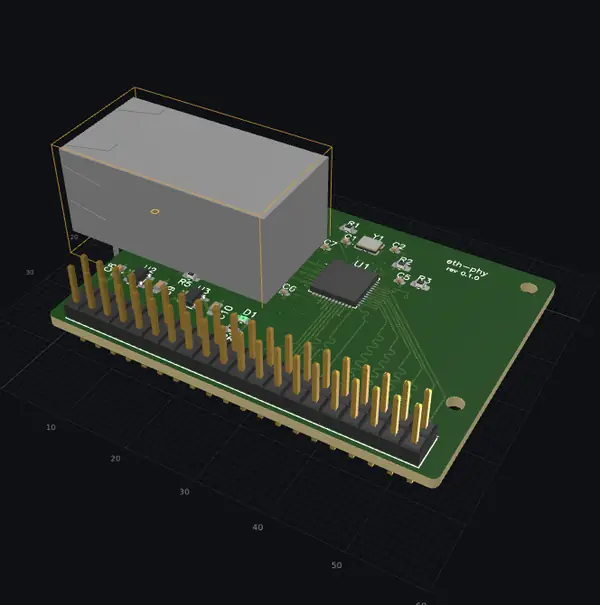
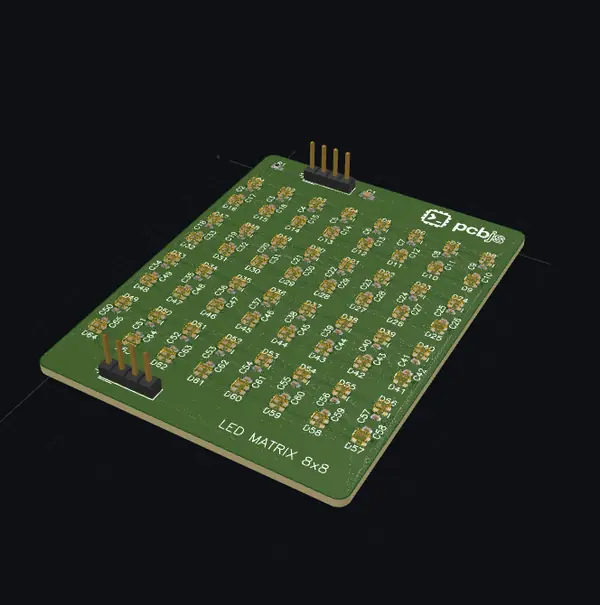
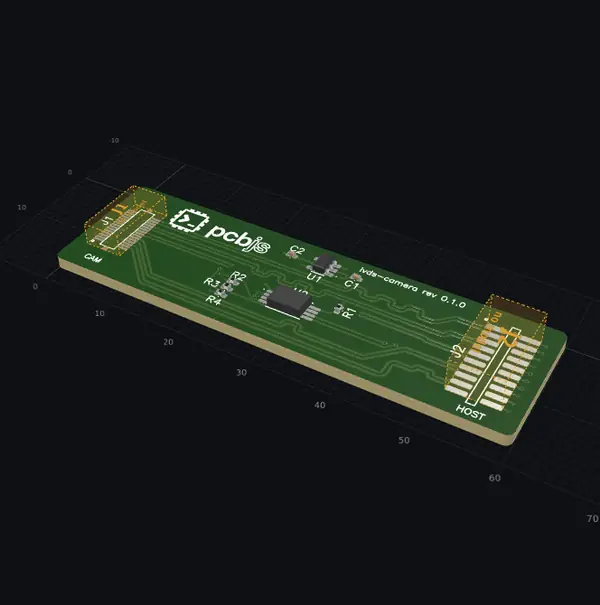
Every folder under examples/ is a pcbjs project: clone the repository, build it, and run pcbjs check in one. The demo boards are the small ones the documentation refers to. The review boards were each built by a reviewer from an empty folder to an orderable board, and are larger: USB hubs, an Ethernet PHY, an SDRAM, a buck converter, a stack of three boards.
The numbers on each card come from pcbjs check --json at the time the site was built: parts, pads, tracks, vias, nets, the legs the autorouter laid, the DRC and ERC counts and the compile time. The pictures are pcbjs shot of the same build, 3D and 2D.
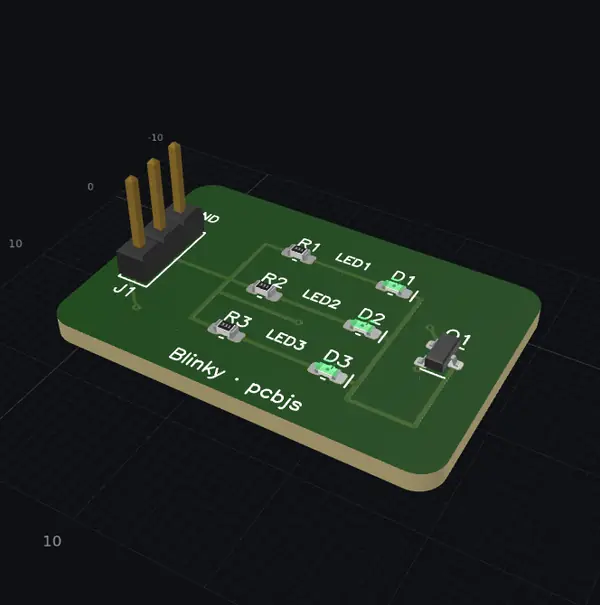
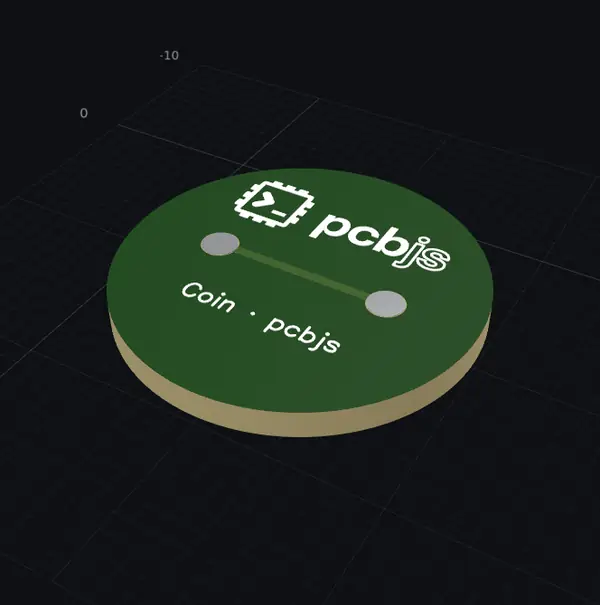
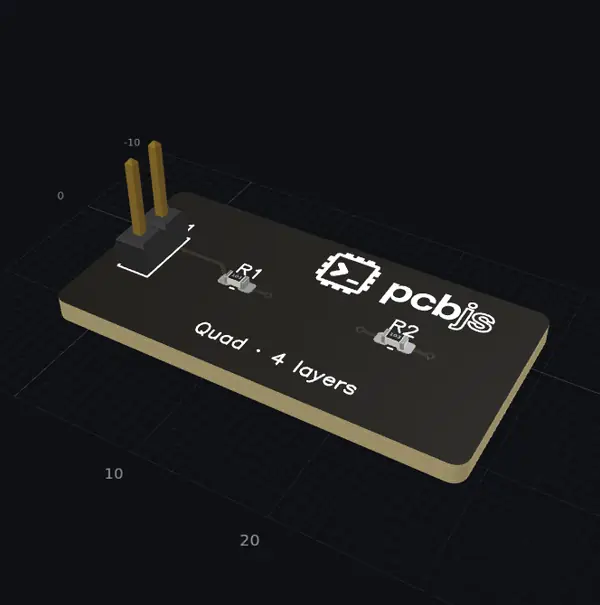
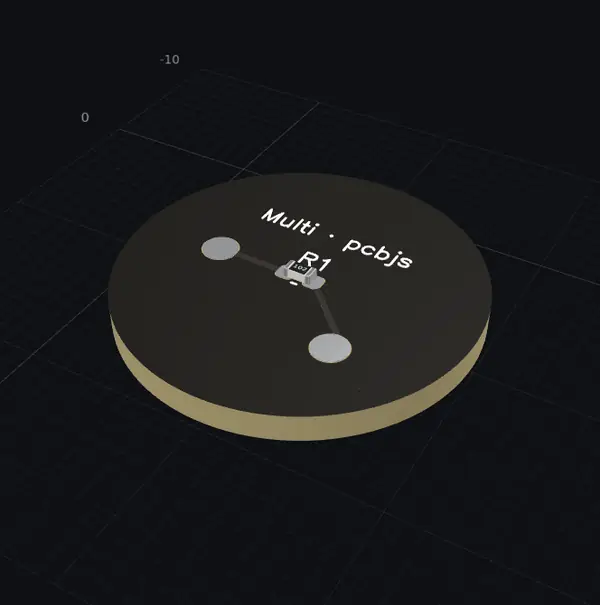
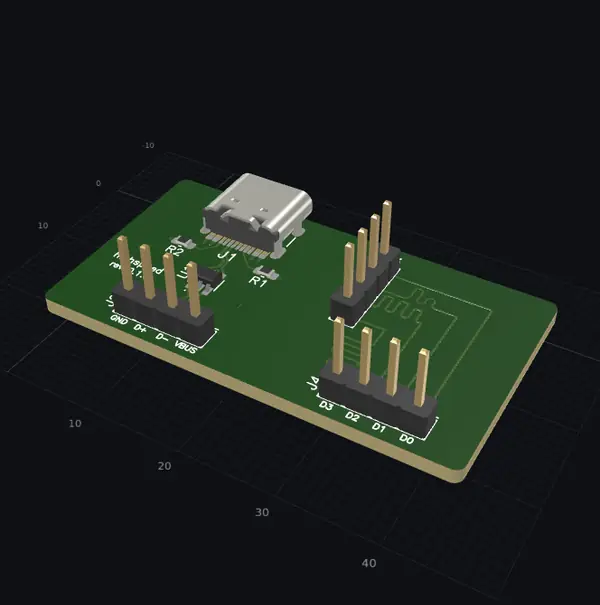
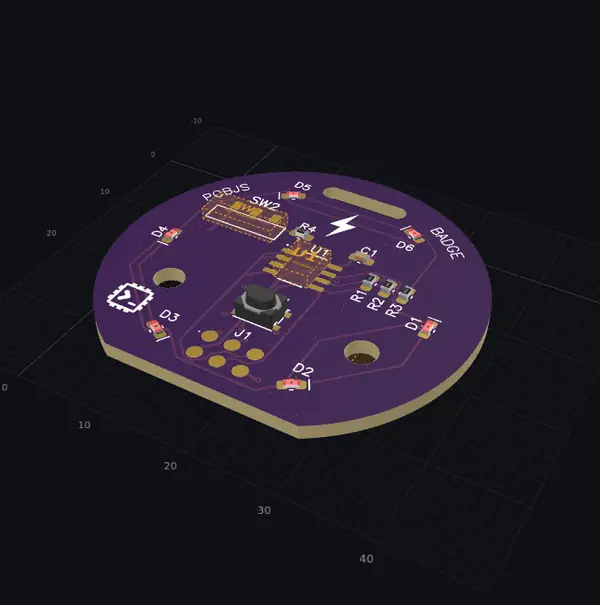
the four demo boards: Blinky, three LED channels split over schematic, sourcing and layout files; Coin, the smallest board; Quad, four layers; Multi, one design for three fab targets with variants
Blinky: three LED channels switched by one transistor on a 30 x 20 mm two-layer board, in three files: blinky.sch.tsx has the nets, parts and schematic picture, blinky.sourcing.ts the part numbers, and this file the layout.
9 parts
20 pads
23 tracks
4 vias
7 nets
2 of 2 autorouted legs
DRC 0 errors, 0 warnings · ERC 0 errors, 0 warnings · compiled in 734 ms
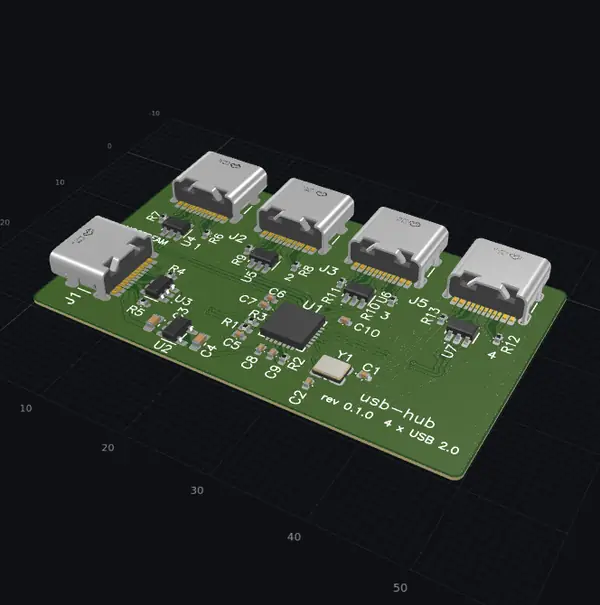
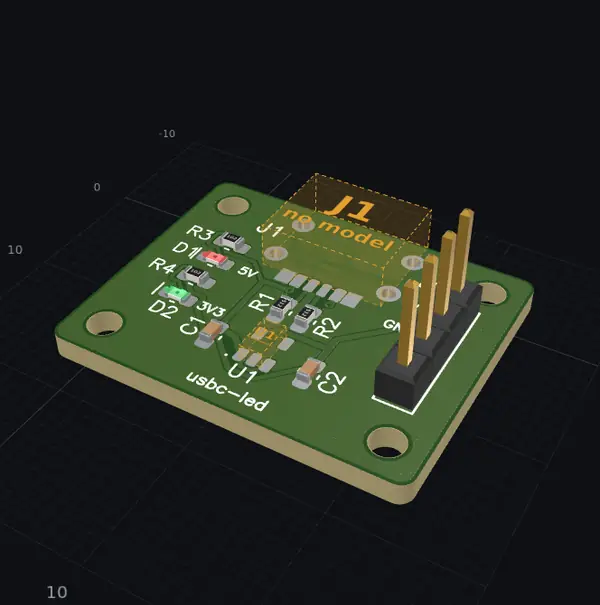
highspeed: a USB-C to 4-pin USB 2.0 header adapter with an ESD array, and a four line data bus between two headers whose lines are length matched, 44 x 24 mm, four layers: signals on F.Cu and B.Cu, GND on In1.Cu, VBUS on In2.Cu.
7 parts
40 pads
32 tracks
16 vias
10 nets
3 of 3 autorouted legs
DRC 0 errors, 0 warnings · ERC 0 errors, 0 warnings · compiled in 1.0 s
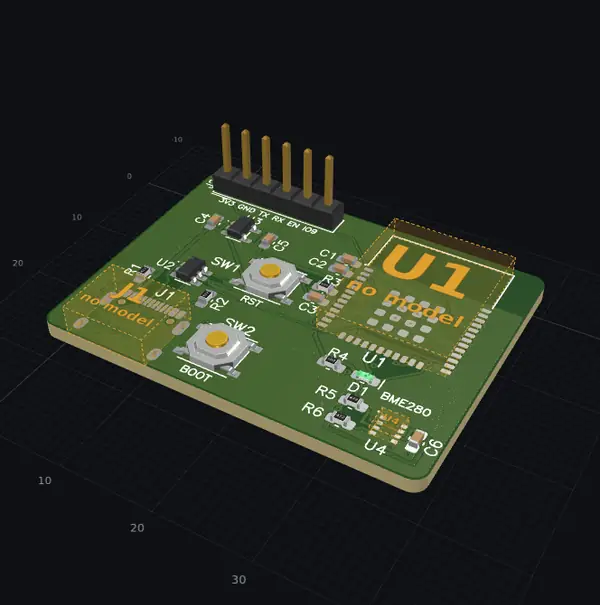
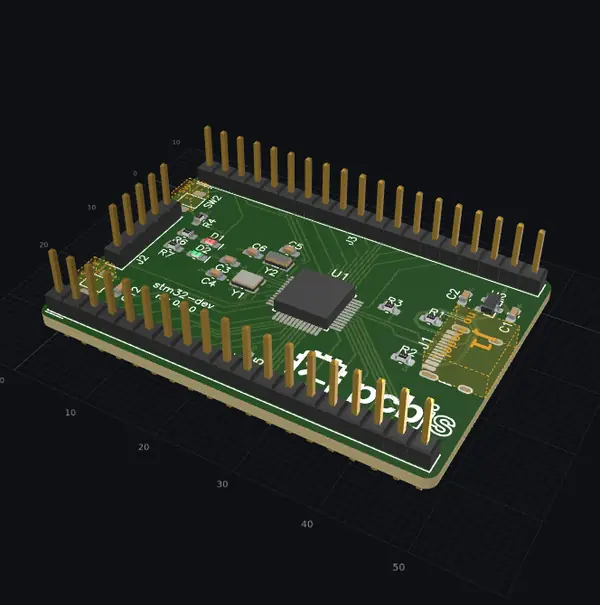
ESP32 sensor node: ESP32-C3-MINI-1, USB-C with ESD, 3.3 V LDO, BME280, reset and boot buttons, status LED and debug header on a 40 x 30 mm two-layer board.
21 parts
130 pads
93 tracks
30 vias
14 nets
27 of 27 autorouted legs
3 with no 3D model
DRC 0 errors, 0 warnings · ERC 0 errors, 0 warnings · compiled in 4.8 s
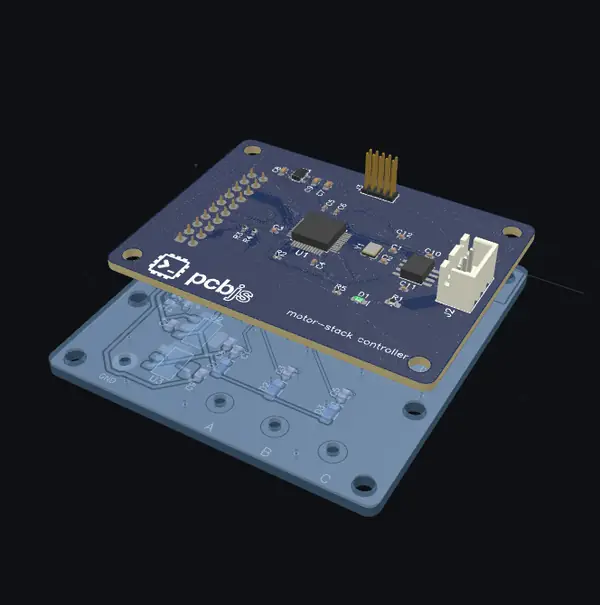
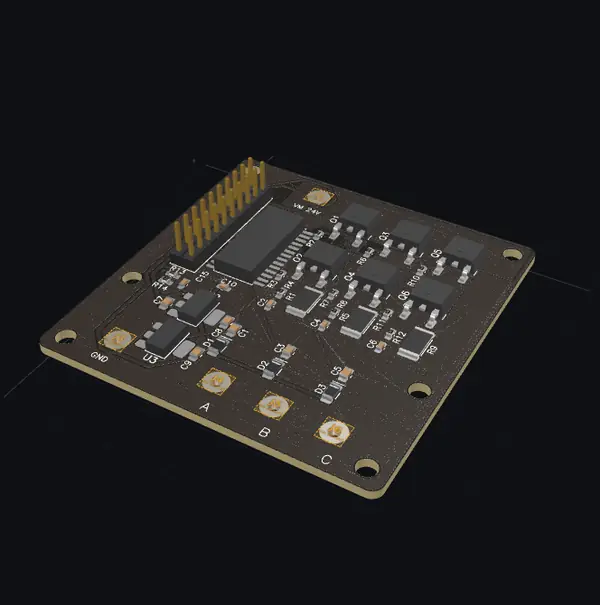
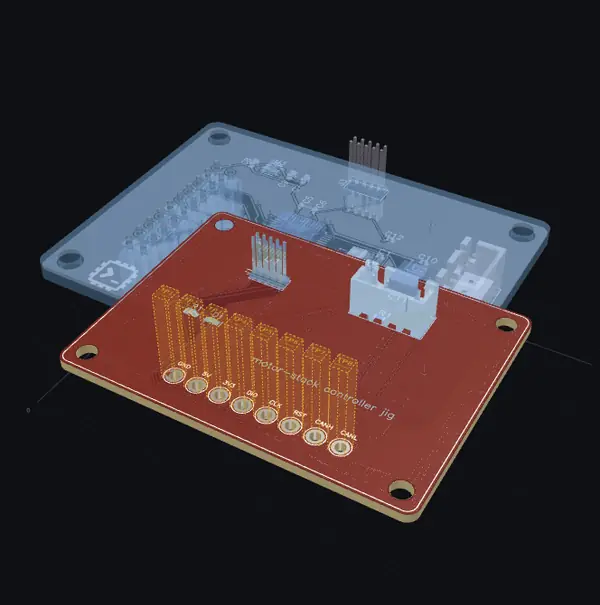
three boards in one folder, controller, driver and test jig, sharing lib/; the driver lays out a half bridge circuit three times
Known findings:driver keeps the ERC warning copper-weight: 2 oz copper under the 1 oz preset rules, kept because the 0.16 mm rules reroute it into split pours
three boards in one folder, controller, driver and test jig, sharing lib/; the driver lays out a half bridge circuit three times
Known findings:driver keeps the ERC warning copper-weight: 2 oz copper under the 1 oz preset rules, kept because the 0.16 mm rules reroute it into split pours
three boards in one folder, controller, driver and test jig, sharing lib/; the driver lays out a half bridge circuit three times
Known findings:driver keeps the ERC warning copper-weight: 2 oz copper under the 1 oz preset rules, kept because the 0.16 mm rules reroute it into split pours
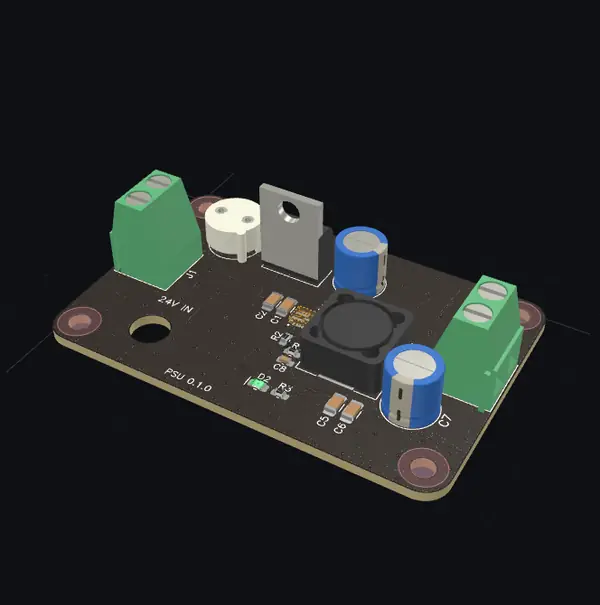
a 24 V to 5 V 5 A buck, copper first: power pours, thermal maps, arcs in the outline and a cutout, 2 oz copper, vendor STEP models
Known findings:none: the regulator's SW, PGND and VIN bars take a 0.02 mm mask margin, inside TI's 0.05 maximum, to keep the 0.13 mm dam black mask needs
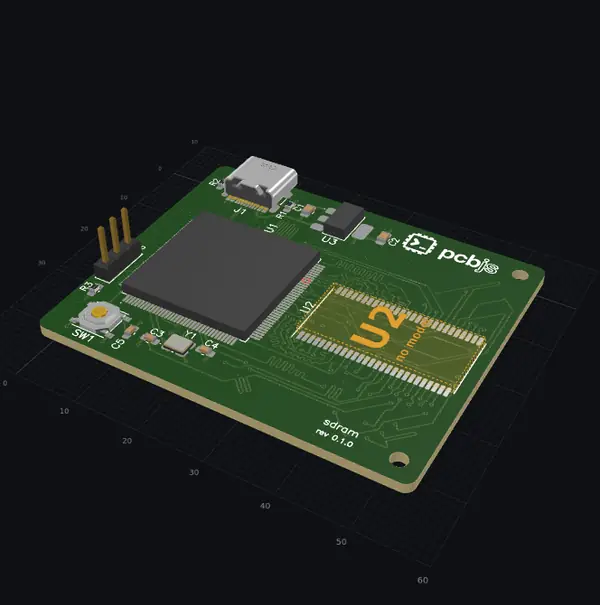
an STM32F429 with a 16-bit SDRAM on four layers: 91 autorouted legs and two match groups on a timing budget
Known findings:one length-match error on DATA: the FMC data pins sit on the far sides of the MCU and the only free board lies behind ADDR, so closing it needs the SDRAM moved or the inner layers opened
sdram: an STM32F429ZI with a 16-bit SDRAM on its FMC, 55 x 45 mm, four layers on the JLCPCB preset: signals on F.Cu and B.Cu, GND on In1.Cu, 3V3 on In2.Cu.
40 parts
295 pads
276 tracks
164 vias
52 nets
99 of 99 autorouted legs
1 with no 3D model
DRC 1 error, 0 warnings · ERC 0 errors, 0 warnings · compiled in 28.9 s
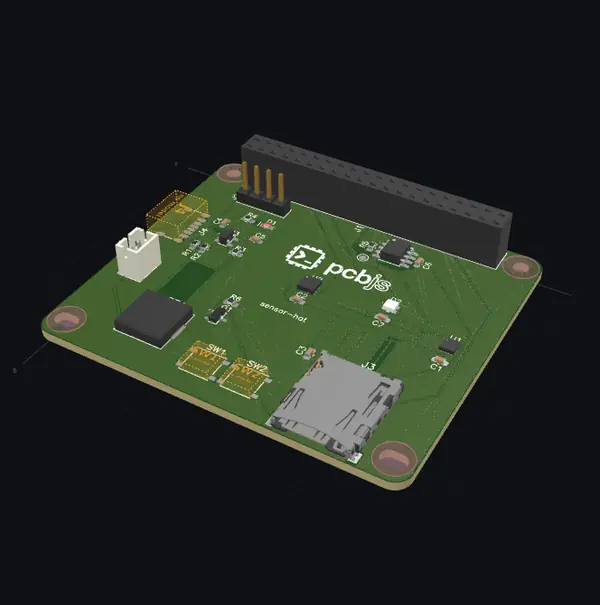
Sensor HAT: a Raspberry Pi HAT with BME280, LIS3DH, an OLED header, micro SD, a LiPo charger on USB-C, the HAT ID EEPROM, a buzzer, two buttons and a WS2812B-2020.
29 parts
153 pads
94 tracks
46 vias
27 nets
57 of 57 autorouted legs
DRC 0 errors, 0 warnings · ERC 0 errors, 4 warnings · compiled in 12.2 s
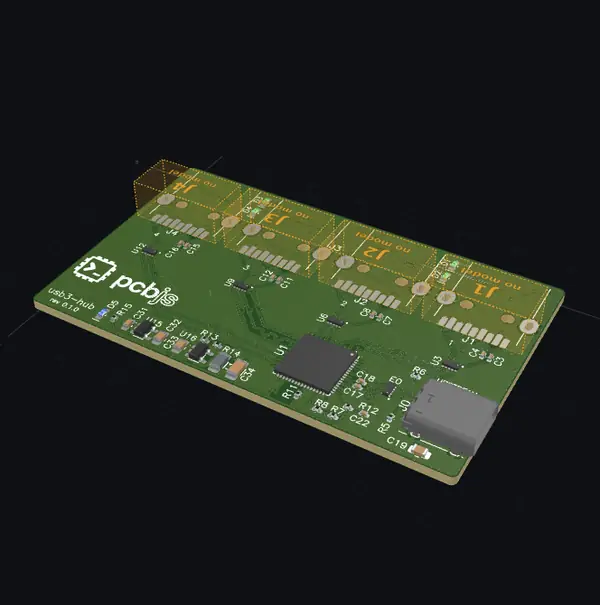
a four port USB 3.2 hub on the 3313 four layer preset: SuperSpeed pairs through AC capacitors and ESD arrays, match groups per port, 115 autorouted legs